Complete Guide to Business Entities in El Salvador
Complete Guide to Business Entities in El Salvador.
- Types, Comparisons, and Opportunities for Foreign Investors.
Written by: César Arriaza
February 23th, 2026 - San Salvador

El Salvador is emerging as a prime hub for global entrepreneurs and investors, offering a flexible legal framework under the Commercial Code (Legislative Decree No. 671, arts. 1-649).
Business entities allow 100% foreign ownership with no major sector restrictions. SRL (Limited Liability Company), SAS (Simplified Joint Stock Company), SA (Corporation), and others balance risk and growth. For foreigners, SAS stands out for remote agility; real-world examples include Bitcoin funds and manufacturing SMEs. (Commercial Code; Decree No. 905 (SAS)
In San Salvador, the National Registry Center (CNR) streamlines registrations, supporting over 10,000 new companies annually. General minimum capital ~US$11,429 (100 colones/accounting unit, art. 7 Currency Law), except SAS with none.
Types of Business Entities and Their Acronyms
The El Salvador Commercial Code regulates five main types:
● SNC (Sociedad en Nombre Colectivo – General Partnership): Partners have unlimited joint liability.
● SCS (Sociedad en Comandita Simple – Limited Partnership): General partners unlimited, limited partners capped.
● SRL (Sociedad de Responsabilidad Limitada – Limited Liability Company): Liability limited to contributions.
● SA (Sociedad Anónima – Corporation): Freely transferable shares.
● SCA (Sociedad en Comandita por Acciones – Limited Partnership with Shares): Hybrid.
Benefits, Drawbacks, Examples, and Recommendations by Profile

The General Partnership (SNC – Sociedad en Nombre Colectivo) is characterized by shared management among partners and does not require a minimum capital contribution. However, one major drawback is unlimited personal liability, meaning partners are personally responsible for the company’s debts and obligations. A typical example would be a family-run law firm such as “Arriaza & Associates.” This structure is generally recommended for trust-based family businesses or small groups with strong mutual confidence.

The Limited Liability Company (SRL – Sociedad de Responsabilidad Limitada) offers stricter ownership control, as the transfer of ownership interests usually requires approval from three-quarters (¾) of the partners. It is a flexible and popular structure for small and medium-sized enterprises (SMEs). However, it is limited to a maximum of 50 partners and typically requires an annual auditor. Examples may include a local restaurant like “Pupusería El Salvador” or a textile importer in San Salvador. This structure is ideal for local business owners who prefer to keep ownership within a closed group.

The Corporation (SA – Sociedad Anónima) is highly scalable and investor-friendly, making it suitable for growing companies seeking expansion and outside capital. On the downside, it involves more bureaucracy, including the requirement to establish a board of directors and comply with more formal corporate governance rules. Examples include retail chains such as “Los Cocos El Salvador SA” or export maquila operations. This structure is recommended for medium-sized or expanding firms that aim to scale operations and attract investors.
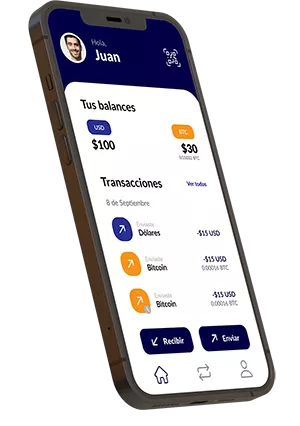
The Simplified Stock Corporation (SAS – Sociedad por Acciones Simplificada) allows for a single shareholder and can be incorporated digitally at a relatively low cost (approximately US$500). While it provides flexibility and ease of setup, it offers less control over share transfers compared to the SRL. A real example would be Chivo Wallet operating as an SAS, or a foreign-owned remote consultancy. This structure is especially recommended for solo foreign investors looking for an agile and modern incorporation process.

Finally, the Limited Partnership (SCS/SCA – Sociedad en Comandita Simple or por Acciones) combines managing partners with unlimited liability and passive investors with limited liability. While it offers flexibility for mixed investment models, the existence of partners with unlimited liability is a significant drawback. This structure is commonly used in ventures such as travel agencies with outside investors and is recommended for hybrid investment arrangements where some partners manage operations and others contribute capital passively.
Specific Recommendations:
Foreign Investors: SAS for unipersonal setup and free share transfers (simple endorsement), perfect for Bitcoin funds or tech; remote via power of attorney. E.g., Chinese maquila investments choose SA for scale.
Business people: SRL for family control, like mall cafes
New Companies: SAS (fast, no fixed capital); SRL with local partners.
In-Depth Analysis: SRL vs. SAS vs. SA
●SRL: Public deed (notary), ~US$1,000-2,000; partners' meeting supreme, managers, Share Register; name ends "SRL". Annual external auditor; suits SMEs like auto shops.
●SAS: Private/digital document, virtual meetings; single representative. E.g., Foreign digital marketers.
●SA: Mandatory board; tradable shares. E.g., Large constructors.
Key Differences:
The Limited Liability Company (SRL – Sociedad de Responsabilidad Limitada) allows for a minimum of two and a maximum of fifty partners. It requires an approximate minimum capital of US$11,429, with at least 50% paid in at the time of incorporation. Ownership transfers are more restricted, as they typically require approval representing three-quarters (¾) of the company’s capital. Management tends to be more rigid, requiring formal meetings and designated managers. Setup costs are generally considered medium compared to other structures. This makes the SRL a solid option for small to mid-sized businesses that value ownership control and structured governance.
The Simplified Stock Corporation (SAS – Sociedad por Acciones Simplificada) can be formed by a single shareholder and allows for an unlimited number of shareholders. It does not require a minimum capital contribution, making it highly accessible for entrepreneurs. Share transfers are generally free and can be executed through endorsement, offering greater flexibility. Management is also flexible and may be conducted virtually, without the need for a formal board of directors. Setup costs are typically low, making the SAS an attractive option for startups, solo investors, and foreign entrepreneurs seeking efficiency and simplicity.
The Corporation (SA – Sociedad Anónima) requires at least two shareholders, with no upper limit on the number of shareholders. Like the SRL, it requires an approximate minimum capital of US$11,429, with 25% to 50% paid in at incorporation, depending on the structure. Share transfers are generally free and may even occur through endorsement or, in some cases, through stock exchange mechanisms if applicable. Management is more formal and requires a board of directors, adding a higher level of corporate governance and oversight. Setup costs are typically high due to its more complex structure. The SA is best suited for larger companies, businesses seeking scalability, and those planning to attract significant investment.
Important:
Uniform taxation: 30% ISR, 13% VAT, 5% withholding on non-resident dividends.
Legal, Accounting, and Migration Implications for Foreigners
Legal: 100% ownership allowed; resident legal representative (DUI/passport + RTN) + alternate mandatory. MH fiscal address; CNR registration with NIT. Branches: Economy Ministry approval, legalized/apostilled parent docs (Foreign Agents Law). Dissolution via bankruptcy (Bankruptcy Law).
Accounting: IFRS/SMEs mandatory; local books (colones/USD), annual auditor, financials to CNR (by May). Monthly MH declarations (VAT/ISR), annual SRT. Large firms: Full IFRS.
Migration: Temporary residency via investment at Migration Offices DG/MH.
If you are looking for a business figure similar to an LLC initially you can start with a SAS, but if you are looking to grow and establish something bigger you must go the route of a S.A. de C.V. The strategy to follow is to look for a professional who can help you every step of the way.
